Is Canada finally turning things around? For years, I've been pessimistic about Canada's economic future, with rising housing costs, weak productivity, and economic uncertainty. But after unexpectedly discovering the Canada Investment Summit at Toronto's Four Seasons Hotel, my outlook started to change. The summit brought together some of the world's largest investors and generated nearly $500 billion in announced investment and financing commitments. Combined with proposed tax incentives, faster project approvals, and renewed efforts to develop Canada's natural resources, could this be the beginning of a Canadian economic comeback?
As a Toronto real estate broker, I'm particularly interested in what this could mean for ordinary Canadians: more jobs, higher wages, stronger businesses, and potentially better housing affordability. Of course, these investments still need to become actual projects, and nothing is guaranteed. I didn't vote for this government, but I'm willing to give credit where it's due. For the first time in a while, I'm genuinely optimistic about Canada's future. Maybe we've been wrong about Canada. What do you think?
In August, the Toronto real estate market looked like it was finally tightening up, but as we look at the preliminary September numbers, I have to admit: I spoke too soon. Sales have dropped nearly 30% compared to last year, and inventory is lingering on the market longer than expected.
Read MoreThe Toronto real estate market may be changing, but not in the way most headlines suggest. While prices remain soft, the underlying data has been steadily improving. Since January, Months of Inventory (MOI) has been declining while the Sales-to-New-Listings Ratio (SNLR) has been climbing. That suggests the market has been slowly tightening.
The September could be a pivotal month for the GTA housing market, so let's go through the key indicators I’ll be watching to determine whether we’re seeing the beginning of a healthier, more balanced market or just a temporary shift.
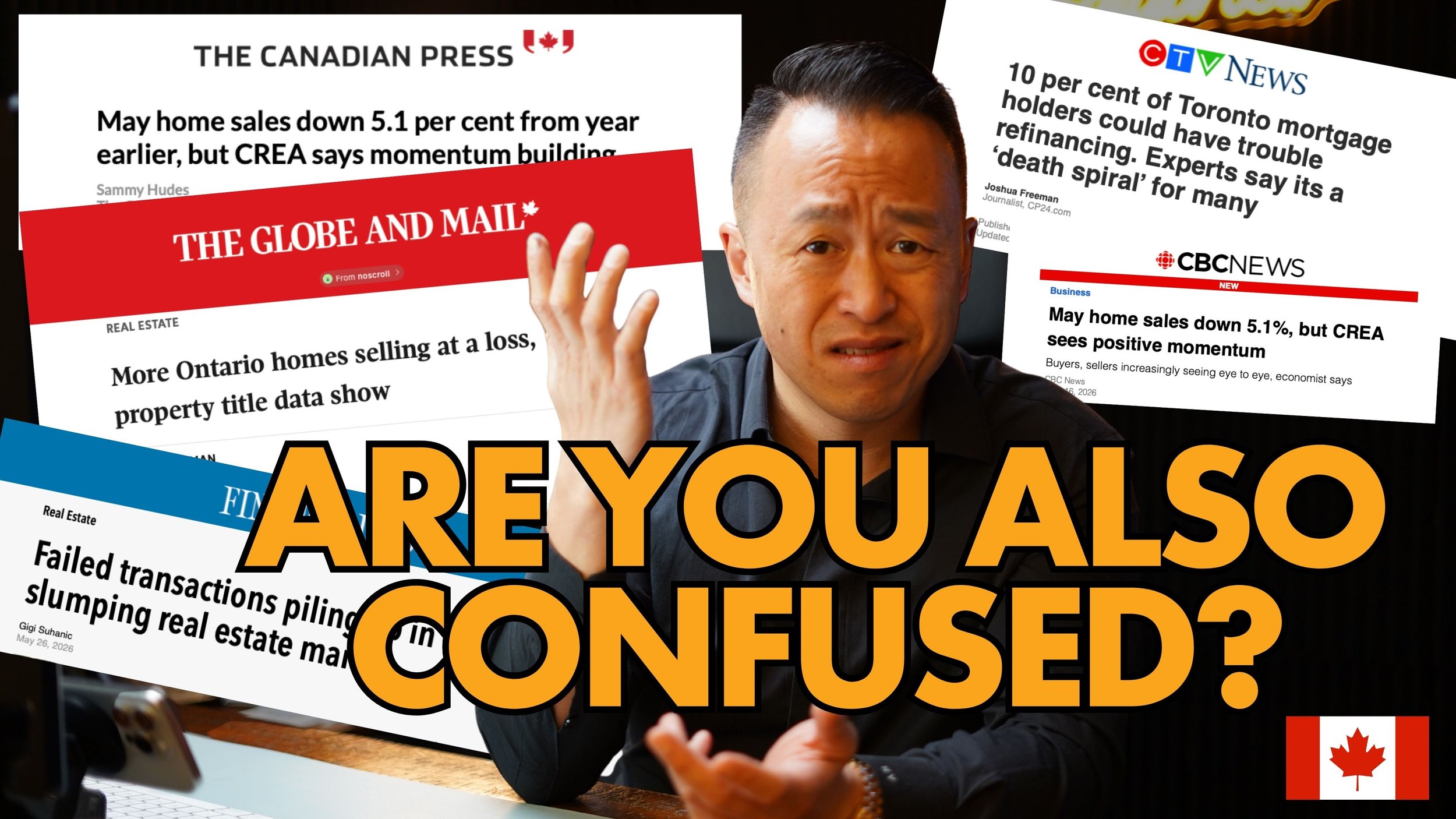
Read MoreEvery day, we’re bombarded with housing headlines: prices are down, inventory is up, construction is slowing, and mortgage renewals are coming. But headlines rarely tell the whole story—and they shouldn’t make your real estate decisions for you.
Let’s walk through a straightforward framework for building your own housing market outlook. The goal isn’t to predict the market perfectly. It’s to understand the factors that matter to your situation, test the assumptions behind the headlines, and make a decision you can live with.
Read MoreThe short answer is: landlording can still make sense—but only when the property and the owner’s plan are right.
A softer rental market and rising costs can make the business look less attractive in the short term. But real estate decisions should be evaluated across the full holding period, including cash flow, financing, maintenance, tenant demand, principal paydown, and long-term appreciation potential.
That doesn’t mean every rental is a good investment, or that every owner should hold on. It means investors need to look past a single month’s rent or one market headline and understand how the pieces fit together.
Finding a deal in Toronto real estate isn’t as simple as it sounds. A lot of buyers think deals are obvious… or that they’ll just show up as a low price. That’s not how it works. The best opportunities are created through strategy, understanding seller situations, and knowing where to look.
In today’s market, there’s more inventory and more choice. But that doesn’t mean everything is a deal. In fact, only the best properties are still selling, and many buyers are either over-negotiating or missing opportunities entirely.
So let's walk through how to actually find good deals in Toronto’s real estate market.
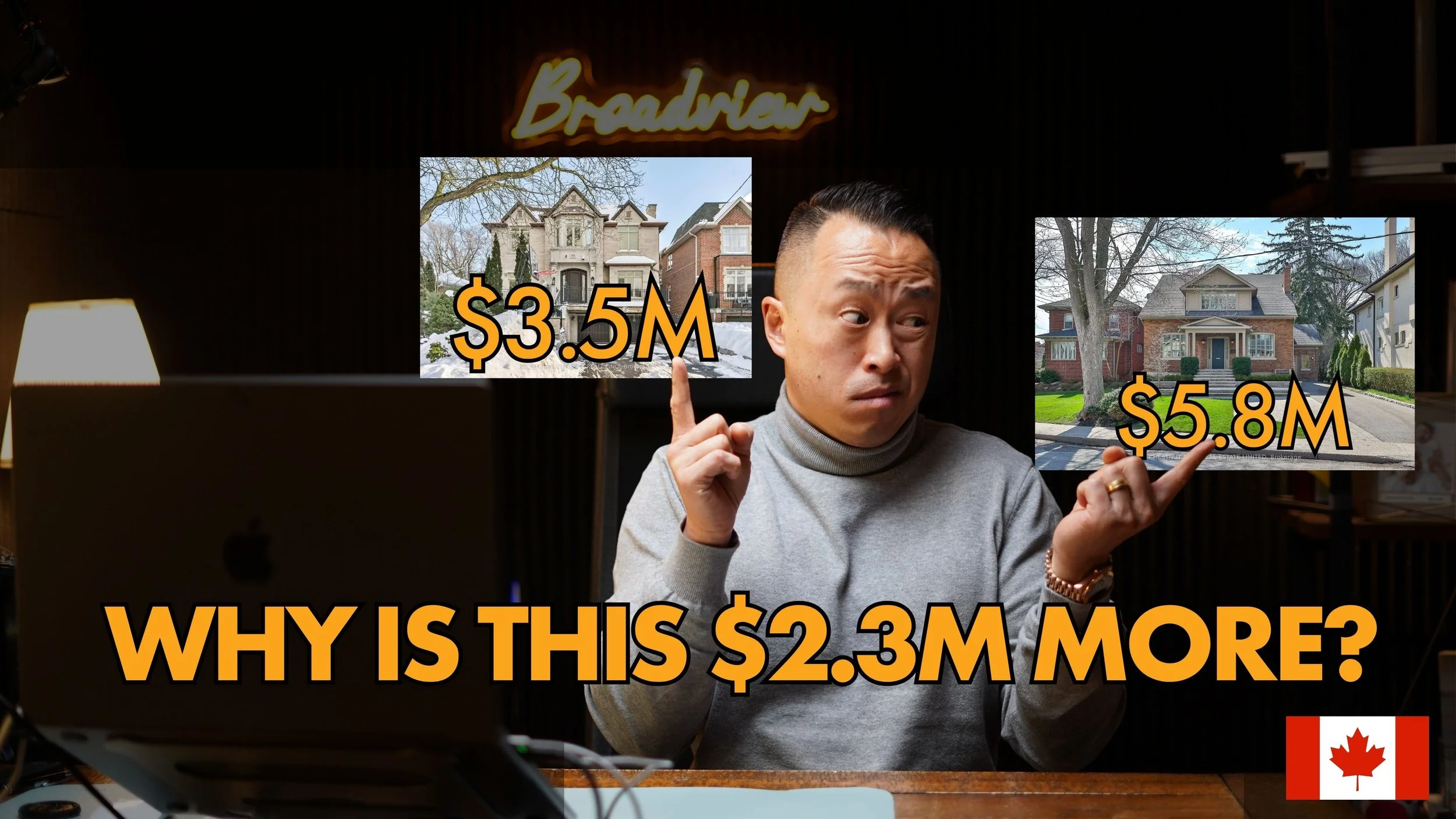
Read MoreWhy does a home in one Toronto neighbourhood cost $2M more than another area, when it's only a 10-minutes drive away? It’s not just schools. It’s not just crime. And it’s definitely not random. Let's look at the real levers that drive neighbourhood pricing.
Read MoreIf you bought a home in the last few years, especially a larger trade-up property, you might be feeling some regret. Did you buy at the wrong time? Did you overpay? Did the market drop? Should you have waited?
Let’s step away from the noise and look at this logically. Let's talk about some ideas that may give you a different perspective.
What year are Toronto real estate prices back to? 2020? 2018? That question sounds simple, but it leads a lot of people in the wrong direction. With so much data floating around and so few actual sales driving the numbers, it’s easy to draw the wrong conclusions from the headlines. Different parts of the market are moving very differently right now, and the answer depends far more on what you’re looking at than most people realize.
Read MoreToronto real estate feels uncomfortable right now. Prices have softened, headlines are pessimistic, and a lot of people are questioning whether owning real estate here still makes sense at all. Some are calling this the end of the housing boom. Others think the system is broken beyond repair.
But I don’t see it that way.
I want to walk you through how I’m actually thinking about the Toronto housing market today. Not from a textbook perspective, and not based on short-term predictions, but from lived experience, market cycles, and long-term fundamentals.
Read MoreToronto is now almost a 50/50 city. About half of households own their home, and half rent. Yet the housing conversation is still stuck on the same question: should you rent or should you buy?
That’s the wrong debate. The real question is what you’re working toward long term.
Renting and owning are just tools. Either path can work if you’re intentional. My framework is simple, the destination is financial independence, where housing no longer dictates your lifestyle or choices.
Read MoreReal estate in Toronto feels rough right now.
Prices are down, interest rates are high, headlines are loud, and a lot of people feel stuck.
Buyers are asking: What if prices fall more?
Sellers are wondering: Why isn’t my place moving?
Owners are facing mortgage renewals, life changes, or carrying costs that just don’t work anymore.
Real questions people are dealing with right now:
- Is it a mistake to buy if prices could drop further?
- When does renting still make sense, and when does it stop?
- How much negotiating power do buyers really have?
- Why some condos simply won’t sell at today’s prices
- What mortgage renewals are about to do to a lot of households
- Where opportunities actually exist for long-term buyers and investors
It's not about creating hype or mongering fear. It’s about understanding your situation, your timeline, and your options in a market that feels uncertain.
Real estate moves in cycles. The hard part is making the right decisions, especially when things feel uncomfortable.
If you’re thinking about buying, selling, holding, or doing nothing at all, this video will help you frame the decision more clearly.
Read MoreMany of the units that Toronto pre-construction buyers bought are now worth less than the purchase price. Appraisals are coming in low, lenders are tightening up, and the gap between contract value and today's market value is often times bigger than the deposit that they put down.
So what to you do if you find yourself in this position? Risk getting sued by failing to close, borrow with private lenders at predatory rates, or close and slowly (or quickly) bleed out? Claim bankruptcy? Crawl under a rock?
Let's talk about some of the real options in front of you. Not theory. Not wishful thinking. Actual steps people in Toronto are using to get through closing without destroying their credit, losing their deposit, or facing years of litigation.
Read MoreListings are sitting longer, open houses feel quiet, and the headlines make it sound like the market still has room to fall. That uncertainty is exactly why my clients asked me this question, and why the answer isn’t as simple as “yes” or “no.” So let's go through a real conversation I had with some recent clients.
If you’re trying to make sense of whether waiting helps or hurts you in this kind of market, this will give you a clearer way to think about timing, leverage, and what really matters.
Read MoreAfter ten rate hikes and two years of high borrowing costs, the Bank of Canada has finally started cutting. For the first time in years, interest rates are “in a good place.” But if money’s cheaper, why isn’t the housing market roaring back to life?
What do the latest rate cuts actually mean for buyers and sellers? How long will it take for monetary policy to show up in home prices? And what are the four wildcards that could change everything?
From shifting immigration targets to global uncertainty and a sticky inflation rate, the story isn’t as simple as “rates down, prices up.” This is a look at the real forces shaping the next phase of Canada’s housing market, and to look for indicators for when things will finally start to move.
Read More"What's a good school zone" is a question I am often asked. But the truth is, buying a home based on school rankings is more of an art than a science. Most rankings, like those from the Fraser Institute, are based on EQAO test scores, which is a narrow and often outdated measure that doesn’t reflect the full picture of a school’s quality. What actually drives school reputation often has more to do with the surrounding neighbourhood’s affluence than the education itself.
In this video, I break down what you really need to know: how catchment boundaries work, what programs and opportunities are available beyond rankings, and why schools can’t be fairly compared with a single number. If you’re buying a home for your family and want to make a smart, informed decision, this is a conversation worth listening to.
Read MoreWhen a tenant moves out, every landlord faces the same question: should you renovate, or keep it simple?
Let's talk about the Golden Rule of Multi-Family Investing, how to decide if a renovation actually makes sense after tenant turnover.
Read MoreMortgage delinquencies in Canada are making headlines, with reports saying they’re “up 30%.” But what does that really mean?
Defaults have risen, but that’s still below Canada’s historical “normal” range. Even during the 1980s peak, it wasn't that bad. By comparison, the U.S. sits much higher.
The truth? The rise looks dramatic in percentages, but the actual risk level is still very low. Context matters more than the headline.
Stay informed, not alarmed.
Read MoreImagine you’re playing Monopoly, and one player already owns most of the houses. Every time someone else lands, they have to pay more and more rent. Even if you save your money and play smart, it’s really hard to catch up when someone else already owns everything.
That’s what’s happening in real life too: homes and apartments are being bought up by people who already have lots of money. Regular people are working hard, but the game feels stacked against them.
Is this just a Toronto thing? Or have other major cities been able to crack the code?
Read More